


edays
edays sells absence depth rather than HR breadth. Absence is the mandatory base module and cannot be bought separately from the platform, with Core HR, Time and Attendance, and Scheduling layered on top. That focus buys things generalist HR suites rarely match: unlimited custom absence types with their own rules, automatic Bradford Factor scoring on every employee profile, statutory templates across 120 countries, and 25 language packs. The trade-off is scope. There is no recruitment, no performance management, and no payroll engine, so edays is bought alongside an existing HRIS, not instead of one.
What is edays?
edays is a dedicated absence and leave management platform. It records planned leave and unplanned absence in one system, applies each country’s entitlement rules automatically, and passes reconciled figures through to payroll. Absence is the mandatory core module, with Core HR, Time and Attendance, and Scheduling sold as separate add-ons.
The scope is deliberately narrow. There is no recruitment, no performance management, and no payroll engine inside the product. What you get instead is depth: unlimited custom absence types with their own rules, automatic Bradford Factor scoring, return to work workflows with fit note storage, TOIL and overtime accrual, and country templates for statutory entitlement.
The typical buyer is an HR team that already runs an HRIS or payroll system it has no intention of replacing, and an absence problem that spreadsheets have stopped solving. Multi-country employers are the sharpest fit, because leave rules diverge by jurisdiction in ways a generalist HR suite usually handles badly.
Absence looks like a solved problem until it crosses a border. Statutory entitlement, carryover caps, public holiday calendars, and sickness reporting all differ by country, and UK employers saw SSP move to day one from 6 April 2026. A specialist that maintains those rules centrally absorbs work a broad suite pushes back onto HR.

Editor’s Verdict for edays
edays occupies a narrow position deliberately. It is the absence specialist you buy when your HRIS handles leave badly enough that running a second system costs less than replacing the first. At 1,400 clients across 120 countries, that market is clearly real.
The commercial terms are where we would push hardest. Three separate customers describe the same cancellation notice change from 30 days to 90 days, delivered as an attachment sitting below an email signature. One of those disputes ended with solicitors involved.
Best-in-category absence configuration held back by opaque pricing and a contract renewal process that has generated repeated complaints.
No prices appear on the vendor site at all. Public listings put the rate between £2 and £2.50 per employee monthly under 500 users, dropping toward £1.30 at higher volume. Every quote is bespoke.
Unlimited custom absence types with individual rules, automatic Bradford Factor scoring on every profile, TOIL accrual, and return to work forms stored alongside fit notes put this well ahead of any generalist HR suite.
Statutory templates cover 120 countries with 25 language packs and EU Working Time Directive rules built in. UK sickness recording moved to day one SSP on 6 April 2026 and the platform handles that centrally.
Reports are strong. Dashboards are not. Administrators repeatedly describe exporting data into Excel to get charts, and several call the report generator itself awkward to navigate once you move past the standard views.
Only four HRIS partners get plug-and-play setup: Cornerstone OnDemand, Cegid, IntelliHR and ELMO. Everything else runs through the custom API, SFTP, or iCal feeds, so a Workday or SAP link is a build project.
The minimum term is 12 months, charged annually upfront by invoice. Three independent reviewers report the cancellation notice period being amended from 30 days to 90 days through a renewal email attachment. One dispute reached solicitors.
Customer service rates 4.8 across 136 scored reviews, the strongest sub-score this product carries, although a named Customer Success Manager only comes with 200 licences or more.
Employees learn it in minutes and the split in feedback is consistent: administrators find configuration harder than staff find booking leave. A handful of reviewers also describe the interface as dated.
edays earns its 4.1 on absence depth that genuinely outperforms broader HR platforms in the same price band. The commercial terms are the reason it does not score higher, and they are the part buyers should negotiate hardest.
edays: Strengths and Limitations
These are drawn from 633 verified reviews, the vendor’s published pricing, integration and security documentation, and our own analysis of what the platform leaves unstated.
You can create unlimited custom absence types and give each one its own accrual, approval and reporting rules. Leave books in hours, days or half days, with separate patterns for shift and part-time staff. This is the reason buyers keep a second system.
Statutory templates cover 120 countries in 25 languages, with EU Working Time Directive logic built in. Reviewers running UK, Germany, France and Italy from one instance describe it as the only system they trialled that handled all four correctly.
Every employee profile carries a live Bradford Factor score, toggled on or off in one click. Absence triggers fire an email alert when a threshold is crossed, which turns sickness data into something managers act on rather than review quarterly.
Customer service scores 4.8 across 136 rated reviews, higher than features, ease of use and value. Named account managers, same-day ticket resolution and video calls come up constantly in positive feedback.
Booking leave, checking a balance and seeing a colour-coded team calendar are all self-explanatory. One reviewer put onboarding at roughly 10 minutes. Adoption problems, which sink most HR rollouts, are almost absent from the record here.
Three independent reviewers describe the cancellation notice period moving from 30 days to 90 days, sent as an attachment below a renewal email signature. One dispute went to solicitors before settling. If contract certainty matters more than absence depth, Breathe publishes plain monthly terms.
The vendor states it cannot offer a free trial because every system is configured to order. You commit to 12 months, invoiced upfront, on a quote you cannot benchmark. Timetastic publishes its per-user rate and lets you self-serve.
Cornerstone OnDemand, Cegid, IntelliHR and ELMO get plug-and-play setup. Workday, SAP and payroll systems route through the custom API or SFTP, which means developer time. One reviewer hit sync failures where two units shared a name but not an ID. Personio ships native payroll connectors.
Administrators describe pulling reports and rebuilding the visuals in Excel. Combine that with a report builder several call unintuitive and the analytics story weakens against the depth of the underlying data. BrightHR gives cleaner in-product charts.
edays’ Core Features
We rated ten capabilities on what the vendor documents, what reviewers confirm in daily use, and where the gap between the two sits. Strong means it beats what comparable absence tools deliver. Adequate means it works but competitors do it better. Limited means you should verify it in the demo before committing.
Unlimited absence types, each carrying its own accrual logic, approval chain and reporting treatment, with no cap on how many you create.
Statutory entitlement, public holiday calendars and EU Working Time rules ship preconfigured for 120 countries across 25 language packs.
Live Bradford Factor scores sit on every profile, and configurable triggers email a named manager the moment a threshold is breached.
Forms send automatically after sickness ends and store against the employee record alongside fit notes, which BrightHR and Timetastic leave to manual process.
Native iOS and Android apps handle leave requests, approvals and sickness logging, and field-based teams cite the app as the reason adoption held.
Colour-coded calendars are the single most praised feature in verified reviews, though visibility is scoped to your own team unless an admin widens it.
The report library is deep but produces tables rather than charts, and administrators routinely export to Excel to build anything visual.
Clock in via QR code, timesheets and project time tracking all work, but this is a paid add-on and one Workday integration lead flagged time tracking as still maturing.
Power comes at a cost. Setting up policies and workflows is repeatedly described as complicated, and several administrators lean on their account manager to finish it.
Four partners get plug-and-play setup: Cornerstone OnDemand, Cegid, IntelliHR and ELMO. Every other system means API or SFTP work.
edays Integrations
The grid below separates the four HRIS partners with plug-and-play setup from the calendar, identity and wellbeing connections that come as standard. Note what is missing: no accounting or payroll platform has a native connector, so Sage, Xero, ADP and SAP all route through the custom API or a scheduled SFTP transfer, and there is no named Microsoft Teams integration anywhere in the vendor documentation.

Ten named connections in total, four of them true plug-and-play HRIS partnerships. Everything else, including Workday, SAP, Oracle and every payroll platform, connects through the REST API or a scheduled SFTP file transfer, both of which need developer time to build and maintain.
4 native · API and SFTP for the restWho Should Use edays?
edays is built for an HR team that already owns an HRIS and needs absence handled properly rather than adequately. The primary use case is multi-country leave where statutory rules diverge, and the primary disqualifier is company size. Below roughly 50 employees on a single set of UK rules, you are paying for configuration depth you will never touch, on an annual commitment, without a trial to test the fit.
Statutory entitlement, carryover caps and public holiday calendars are maintained centrally for 120 countries. Reviewers managing UK, Germany, France and Italy from one instance describe edays as the only system they trialled that got all four right without workarounds.
Live Bradford Factor scoring and configurable absence triggers turn sickness data into manager action rather than a quarterly report. Several HR directors report sickness rates falling once patterns became visible for the first time.
edays is bought alongside an existing system, not instead of one. It handles absence properly while your HRIS keeps payroll and records. Buyers who compared it against a full suite chose it precisely because they wanted absence solved, not a migration.
Leave books in hours, days or half days, with separate working patterns per group. Companies running office staff, part-timers and rota-based field teams together get one accurate entitlement calculation instead of three spreadsheets.
The same depth that makes edays right for those buyers makes it the wrong purchase for four others.
The minimum term is 12 months, invoiced upfront. Multiple customers report the cancellation notice period changing from 30 days to 90 days through a renewal email attachment, with one dispute reaching solicitors before settlement.
Nothing is published. Every figure comes from a scoped quote based on headcount, modules and country count, and there is no free trial because each system is configured to order.
There is no recruitment, no performance management and no payroll engine. Absence is the mandatory base module and cannot be purchased separately from the platform, so edays supplements an HRIS rather than becoming one.
A named Customer Success Manager only comes with 200 licences or more. Below that you sit in a tech-touch programme, which matters because administrator configuration is the part reviewers most often need help finishing.
edays Pricing: What It Actually Costs
The pricing page carries no numbers. It lists the modules, states that a quote depends on headcount, module mix and country count, then asks for your details. There are no published tiers, no per-seat rate, and no free trial, because the vendor says every system is configured to order.
The only public figures come from third-party listings: roughly £2 to £2.50 per employee per month between 50 and 500 users, falling to between £1.30 and £2.25 above 500. There is no percentage-based plan, so no crossover calculation applies. What does apply is the annual commitment.
Absence is mandatory. You cannot buy Core HR, Time and Attendance or Scheduling without it, so every quote starts from the absence base rate and adds modules on top. Payment is annual, upfront, by invoice, on a 12 month minimum term.
Holiday and leave tracking, sickness management, shared team calendars, custom absence types, automated notifications, country-specific templates and the mobile app. Every customer buys this. No other module can be purchased without it.
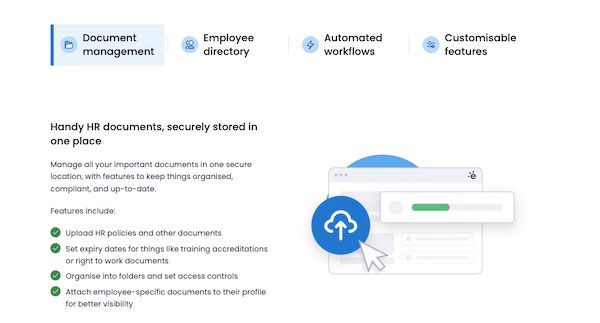
Document management, central employee database, employee directory, automated workflows and alerts, work location management. GDPR-compliant storage. Useful if you have no HRIS, redundant if you already own one.
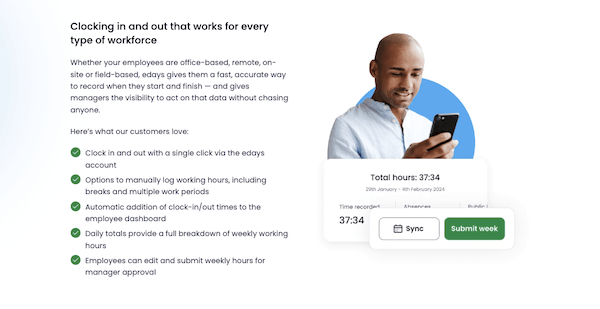
Clock in and clock out via QR code or terminal, employee timesheets, project time tracking, overtime and TOIL accrual, EU Working Time Directive compliance. Includes API connectors for physical clocking hardware.
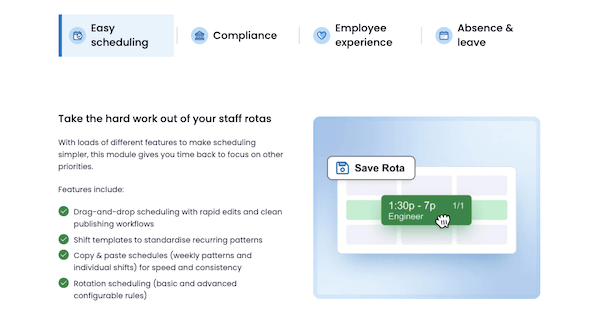
Drag and drop rota building, shift swapping, rota templates, requirement filters, fatigue management rules and budget tracking. The most recent addition to the platform, so ask for reference customers on it specifically.
The vendor confirms no exit fees at the end of an annual term, but the notice window is what governs whether you can leave. Multiple customers report it being amended through a renewal email attachment. Get the current figure written into your contract.
Published third-party bands do not state a tax basis. On a 300 person workforce at £2.20, that is the difference between roughly £7,920 and £9,504 a year. Confirm which figure your quote uses before comparing it to anything.
Pricing is per employee, but the support model keys off licence count, and a named Customer Success Manager starts at 200. Ask whether leavers, seasonal staff and non-system managers count, and what happens to the rate mid-term as headcount moves.
Additional pricing terms: minimum contract length is 12 months, charged annually in advance and payable by invoice. Longer initial terms are available. No free trial is offered on any module. Absence is required for all customers and cannot be removed from a subscription. Band figures above are drawn from public third-party listings, not from the vendor, who publishes no rates. Data verified 24 August 2026.
How edays Compares to Alternatives
We compared edays against five products UK buyers actually shortlist alongside it: Timetastic and Breathe at the simple end, BrightHR for SMEs wanting employment law cover, and Personio and BambooHR as the full HRIS alternatives. Each represents a different answer to the same question.
The comparison runs on four attributes that decide these deals: absence and leave depth, multi-country compliance coverage, pricing transparency, and platform breadth. edays leads on two and loses on two, which is the honest shape of this market.
This is the category edays was built for and nothing here matches it. Unlimited custom absence types with individual rules, live Bradford Factor scoring and automated return to work forms sit above what the HRIS platforms offer as a leave module. Timetastic deliberately does less.
Statutory templates for 120 countries in 25 languages, with EU Working Time Directive logic built in. Personio is the only serious rival here and its strength is European labour law rather than global leave rules. Breathe, BrightHR and Timetastic are effectively UK products.
edays publishes nothing and offers no trial, so you commit to 12 months on an unbenchmarked quote. Timetastic prints £1.20 per user with a 30 day trial. Breathe prints flat bands from £24 a month. Personio is quote-only too, but at a scale where procurement expects it.
Four plug-and-play HRIS partners and no recruitment, performance or payroll engine. Personio and BambooHR replace your HR stack outright. BrightHR bundles employment law advice and health and safety. edays assumes you already own the system it plugs into.
| Product | Absence Depth | Multi-Country | Price Transparency | Platform Breadth |
|---|---|---|---|---|
 edays From £1.30 per employee/mo, quote only |
Leads |
Leads |
Falls behind |
Falls behind |
|
Timetastic £1.20 per user/mo, 30 day trial |
Falls behind |
Falls behind |
Leads |
Falls behind |
|
Breathe From £24/mo per business, 14 day trial |
Competitive |
Falls behind |
Leads |
Competitive |
|
BrightHR From £3.00 per person/mo |
Competitive |
Falls behind |
Leads |
Competitive |
|
Personio Quote only, around €7.60 per employee/mo |
Competitive |
Competitive |
Falls behind |
Leads |
|
BambooHR From $10 per user/mo |
Falls behind |
Competitive |
Competitive |
Leads |
How edays Performs in Practice
Four buying situations, drawn from the headcounts, markets and stacks that appear most often in verified reviews. Two are strong fits, one is workable with a clear ceiling, and one is a case where edays is the wrong purchase. Costs shown are realistic all-in annual figures, not the headline rate.
This is the deal edays wins. Four sets of statutory rules run from one instance without workarounds, and the 200 licence threshold means a named Customer Success Manager. The SAP link is an API build, so budget developer time in year one.
Bradford Factor scoring and trigger alerts do the work here, and shift patterns book leave in hours rather than days. Add Core HR since there is no HRIS behind it. Several reviewers in this shape report sickness rates dropping once patterns became visible.
It works, but the economics turn. At 95 people you sit below the 200 licence support tier and pay roughly £2,700 a year on top of BambooHR. Below about 120 employees on two similar jurisdictions, BambooHR’s own leave module plus Timetastic at £1.20 costs less and solves enough.
Wrong product. You commit to 12 months upfront, with no trial, for configuration depth 28 people on one holiday policy will never use. Timetastic costs about £400 a year, prints its price and gives you 30 days to test it first.
What Users Say About edays
The sample runs to 633 verified reviews across three independent platforms, scoring 4.6 on 41 reviews, 4.7 on 140, and 4.52 on 452. The scores agree, which is unusual and worth noting. What the aggregate hides is the collection pattern behind it and where the few critical reviews cluster.
These splits are approximate, read from review source labels rather than published figures. Roughly seven in ten entries came through a vendor or platform invitation, most of them carrying a nominal incentive. That matters because the small number of critical reviews on record are almost all organic, which suggests unhappy customers are not the ones being asked.
The most repeated point across all three samples. One reviewer put onboarding at about 10 minutes. Colour-coded team calendars and one-tap approvals come up constantly, and resistance to rollout barely appears anywhere in the record.
Customer service scores 4.8 across 136 rated reviews. Reviewers name individuals, describe same-day ticket resolution, and mention account managers joining last-minute video calls during setup problems.
Reviewers running UK, Germany, France and Italy from one instance say edays was the only system they trialled that handled all four. Another cites country-specific rota and absence rules for Italian operations.
Several HR directors report sickness rates falling after implementation, attributing it to seeing patterns they had never measured. One describes discovering the scale of the problem only once tracking began properly.
Three separate customers describe the cancellation notice period moving from 30 days to 90 days, sent as a linked document below an email signature rather than flagged in the body. One dispute went to solicitors before settling commercially.
The split is consistent. Employees find it simple, administrators find policy configuration complicated, and several say they lean on their account manager to finish setup rather than doing it alone.
Administrators describe generating reports then exporting to Excel to build any chart. Others call the report builder itself unintuitive, particularly for custom fields, filters and historic date ranges.
Only administrators can amend leave dates, which managers repeatedly flag as restrictive. Calendar visibility is scoped to your own team by default. One reviewer hit sync failures where two organisational units shared a name but not an ID.
Methodology: all figures pulled 24 August 2026. Three platforms carry verified scores and counts for this product. No profile exists on Trustpilot, so it is excluded rather than reported as zero. Software Advice and GetApp listings draw from the same review pool as one source already counted here and are excluded to avoid double counting. The rating distribution shown is the only published breakdown available and covers 140 of the 633 reviews. Before signing, ask the vendor for two reference customers of similar headcount and country spread, and for one who has been through a contract renewal.
Is edays Worth It?
The buying decision comes down to whether absence is a real problem or an admin annoyance. If leave rules differ across countries, sickness is costing you money you cannot quantify, or contracts and shift patterns make entitlement calculation genuinely hard, edays earns its place as a second system. If none of that is true, you are buying configuration depth you will not use, on a 12 month commitment.
The thing to settle before signing is what happens at renewal. Ask for the cancellation notice period written into the order form, ask how future changes to terms will be communicated, and get the answer in the contract rather than an email. The vendor’s marketing does not address this anywhere, and it is the only part of the record where customer experience turns sharply negative.
edays does absence better than anything at its price. Read the renewal clause before you sign and it becomes a straightforward purchase.
edays: Common Questions
Here are some of the frequently asked questions about edays by users.
Yes. The product is styled edays, the legal entity is E-days Absence Management Ltd, and older listings still use e-days with a hyphen. There has been no rebrand or change of ownership behind the different spellings.
edays publishes no prices. Every quote is built from your headcount, the modules you need and the number of countries you operate in. Public third-party listings put the rate between 2.00 and 2.50 pounds per employee per month below 500 users, falling to between 1.30 and 2.25 pounds above that.
Absence is the mandatory base module and add-ons are priced on top of it. Payment is annual and upfront by invoice, on a 12 month minimum term.
No. The vendor states that because each system is configured to the customer, it cannot offer a trial of the product. It offers a personalised demo instead. Some software directories still list a free trial for edays, which is a listing error rather than a current offer.
Four HRIS platforms have plug-and-play integrations: Cornerstone OnDemand, Cegid, intelliHR and ELMO. Calendar syncing works with Outlook, Gmail and any web-based calendar through iCal feeds, and single sign-on runs through Microsoft Azure.
Everything else, including Workday, SAP, Oracle and payroll platforms, connects through the custom API or a scheduled SFTP transfer. Both of those need developer time, so treat an HRIS link as a build rather than a switch you turn on.
It works technically, but the economics rarely justify it below about 100 employees on a single set of leave rules. You commit to 12 months upfront without a trial, and a named Customer Success Manager only comes with 200 licences or more. Smaller UK teams replacing a spreadsheet usually get better value from a simpler leave tracker with a published rate.
Yes, and it is the strongest reason to buy it. Statutory entitlement, public holiday calendars and local absence rules are maintained for 120 countries across 25 language packs, with EU Working Time Directive compliance built in. Separate configurations can run for different countries, sites or teams inside one platform instance.
The minimum term is 12 months, charged annually in advance. The vendor confirms there are no exit fees at the end of an annual subscription, but the notice period governs whether you can leave on time.
Multiple customers report that period changing from 30 days to 90 days through terms attached to a renewal email, and one dispute reached solicitors before it was settled. Ask for the exact notice period in days to be written into your order form, and ask how any future change to terms will be communicated.
No. There is no recruitment, performance management or payroll engine. The Core HR module covers documents, an employee directory and workflows, which suits companies with no HRIS at all, but edays is designed to sit alongside an existing HR system rather than replace one.